Under the Water & Food Security thematic pillar
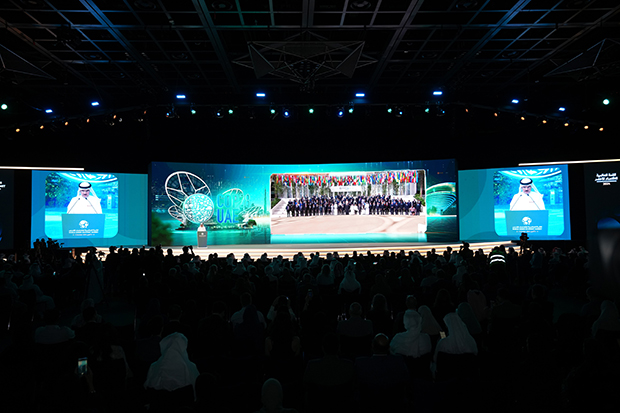
Dubai, UAE, 17 October 2026: Under the patronage of HH Sheikh Mohammed bin Rashid Al Maktoum, Vice President and Prime Minister of the UAE and Ruler of Dubai, the Dubai Supreme Council of Energy, Dubai Electricity and Water Authority (DEWA) and the World Green Economy Organization (WGEO) are organising the 12th World Green Economy Summit (WGES) on 21 and 22 October 2026 at the Dubai World Trade Centre, under the theme ‘From Success to Scale: Showcasing the Green Economy’.
This year, WGES 2026 will focus on four main thematic pillars: Energy Technology & Infrastructure, Business Strategy & Transition, Water & Food Security and Finance, alongside three cross-cutting themes: Artificial Intelligence (AI), Governance and System Enablers.
The Water & Food Security thematic pillar highlights how technology and infrastructure are transforming vulnerabilities into strategic capabilities, from decarbonising water production and strengthening the water-energy nexus to advancing precision agriculture and building climate-resilient food systems.
“Water security is closely linked to zero hunger, good health and well-being, responsible production and consumption, climate action and other UN Sustainable Development Goals. Water and food security are fundamental pillars of economic and social stability. This underscores the need to build more sustainable and resilient water and food systems to meet rising demand and address the challenges of climate change. WGES provides an effective platform to strengthen international cooperation, channel investment into projects with sustainable economic and development impact, and harness innovation and advanced technologies, including artificial intelligence and data analytics, to develop scalable solutions, enhance resource management efficiency, increase local production, improve supply chains and strengthen future readiness,” said HE Saeed Mohammed Al Tayer, Vice Chairman of the Dubai Supreme Council of Energy, MD & CEO of DEWA and Chairman of WGEO.
“The summit contributes to advancing the objectives of the UAE Water Security Strategy 2036 and the National Food Security Strategy 2051. It also supports ongoing preparations for the 2026 United Nations Water Conference, which the UAE will host, in partnership with the Republic of Senegal. WGES advances national and global efforts to address worldwide water scarcity, particularly as 2.1 billion people globally still lack access to safely managed drinking water,” added Al Tayer.
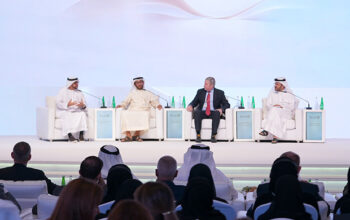
WGES 2026 speakers highlighted climate resilience as a strategic long-term investment that strengthens economic stability, protects food security and drives sustainable growth.
“Nature-based solutions can help manage climate-related risks such as flooding, extreme heat and water stress, while also strengthening food and water security, supporting livelihoods and delivering wider benefits for biodiversity and local economies,” said Marina Antonopoulou, Chief Climate Change and Conservation Officer at Emirates Nature WWF.
“As climate pressure intensifies, food systems must become more resilient, resource-efficient and locally adaptable. Technology is giving us extraordinary tools – from controlled-environment agriculture and precision systems to new approaches in food manufacturing – but technology alone will not transform our food system,” said Ghita Bahmad, founder and CEO of The Food Engineer.
Stefano Castoldi, Partner, Climate Change & Sustainability Services at EY, said: “For decades, water scarcity was treated as the region’s greatest constraint. It is time to treat water as its greatest strategic asset. Reverse osmosis was the Middle East’s success story that turned seawater into economic growth.”
Kai-Uwe Buerger, CEO and co-founder of the A1 Water & Energy Group (A1WG), said: “Technology alone will not deliver water and energy security. Reaching SDG 6 and SDG 7 – water and clean energy for all – by 2030, or coming close, demands innovative and comprehensive solutions across technology, financing and policy, and a step-change in private-capital mobilisation.”
Anne Le Guennec, CEO of Veolia Water Technologies, said: “The ability to combine scale, flexibility and speed is essential to supporting territories facing urgent challenges today and preparing them for tomorrow. Yet resilience must also be measured by the resources we preserve. Energy efficiency is therefore at the heart of our approach: the significant reductions already achieved demonstrate that desalination can contribute to water security while limiting its environmental footprint.”
Marie Deschamps, Director of the MENA Regenerative Agriculture Initiative at Goumbook, said: “In the MENA region, the future of food lies in combining technology, science, local knowledge and nature-based solutions to build food systems that are regenerative and fit for a warmer world, and communities that are resilient enough to thrive within them.”